Frama Film
International
Frama Film International, directed by Victor J. Tognola who founded it, currently produces fiction films and documentaries focused on preserving memory and fostering sensitivity toward nature – a nature to which we all belong, even if we have partly forgotten it.
In particular, it addresses young people absorbed by technology, games, mobile phones, and the web, who are living in an increasingly virtual world and need points of reference and memories of the past to better understand the present.
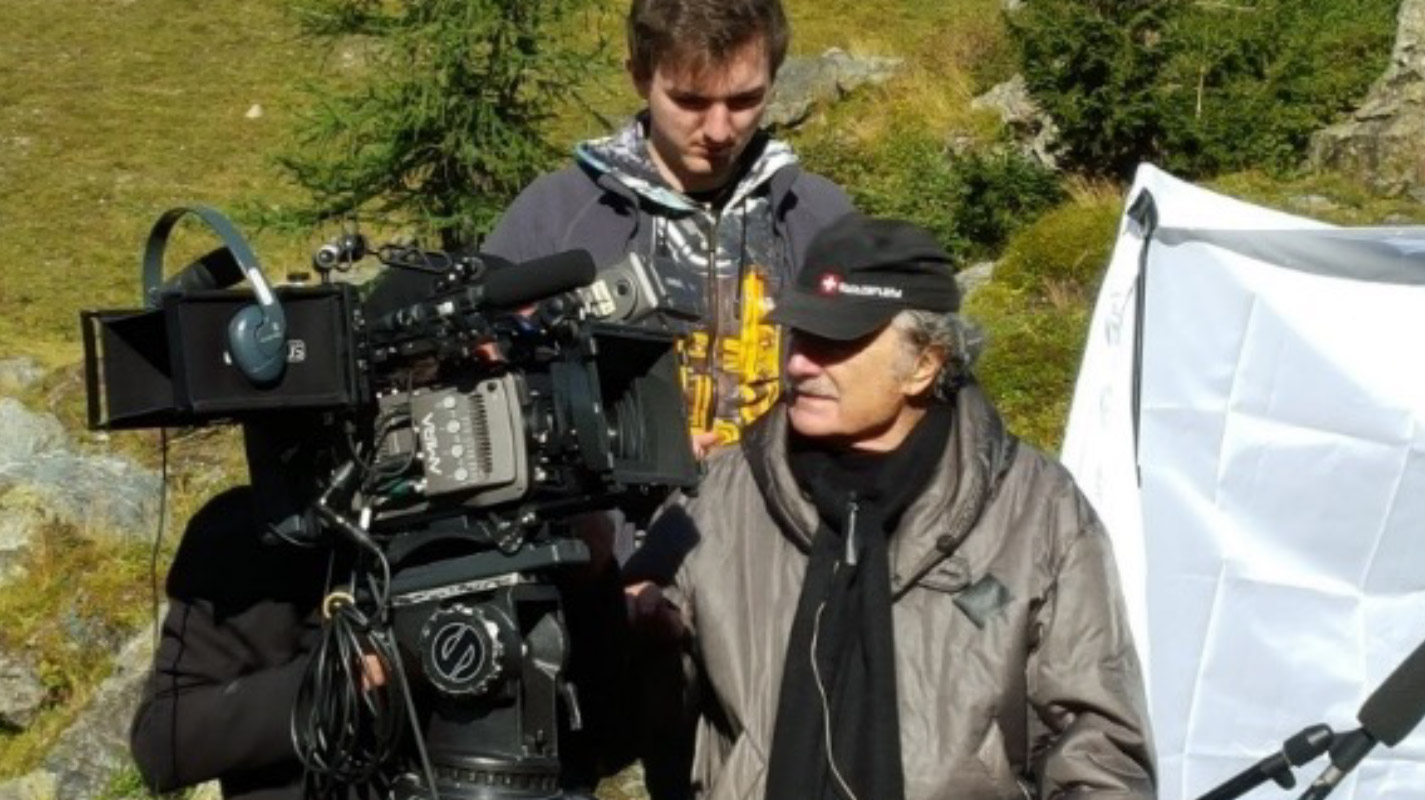
Victor J. Tognola started very young, writing short stories for the literary page of Libera Stampa, while simultaneously working for Swiss Radio (RSI).
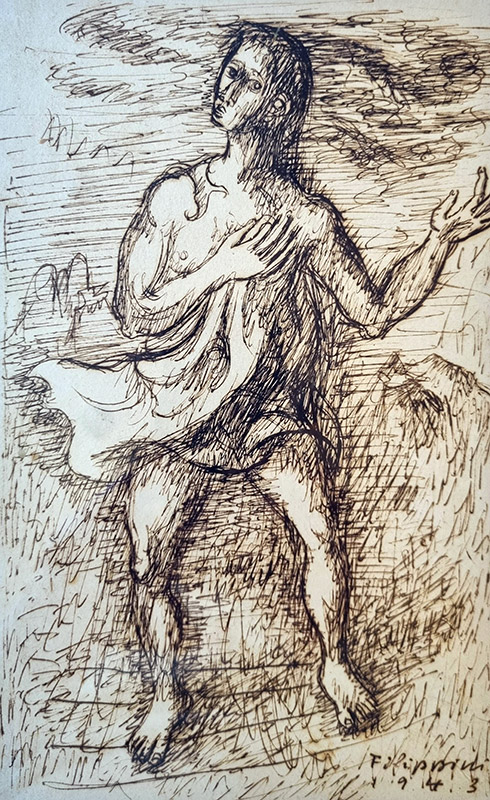
Under the guidance of Felice Filippini, Director of Spoken Services – a brilliant writer and painter who, first thing, gave him his drawing of “The Sower” – his mantra is that every created work becomes a seed for the present and a flower for those who come after. Victor worked on radio documentaries, wrote radio dramas, worked as a reporter, and created the radio magazine La Luna si è rotta (The moon has broken).
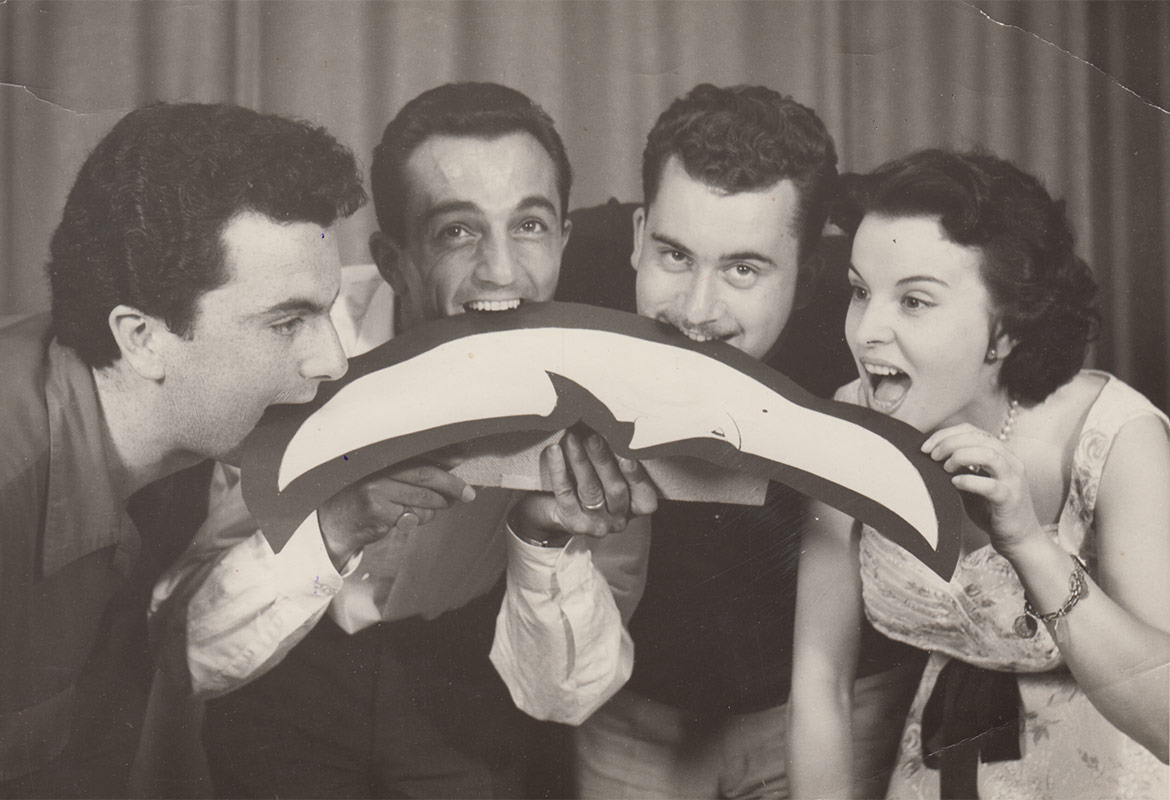
Victor J. Tognola - Alberto Canetta - Nino Bertini - Franca Primavesi
Nelly Valsangiacomo: Voce e specchio.
Storia della radiotelevisione svizzera di lingua italiana, Locarno, Dadò Editore, 2009.
A radically innovative variety show that introduced groundbreaking elements compared to regular programming. The novelty was made possible by the introduction of magnetic tape, which, with the help of scissors, allowed music and songs to be deconstructed.
New phrases were created, taken from different pieces by different singers, reassembled into new sequences that would exchange repartee, creating a theatre of the absurd and eliciting surprising plays of irony – but not only that: between sketches and recombinations, the sense of absurdity emanating from the resulting products was heightened by the fact that within the fragmented songs, various noises were inserted, animal sounds, among which the howl of the only coyote present in Discoteca Rumori recurred.
For example, the Italian tango, which a famous Neapolitan singer performed as “taaango” and in La Luna was stretched ad libitum, thanks to the insertion of a gong of the same musical pitch, which in turn, imperceptibly, became a Texan coyote.
In reality, it wasn’t just songs that were taken apart; it was the very concept of variety entertainment. Tognola continued along this line with a series of equally successful shows and segments, such as La Luna non si è rotta, Il Controgatto, Quando il Gallo Canta, Can (coyote howl)... Zoni, Peekaboo, Attenti al filone, Perché attenti al filone?
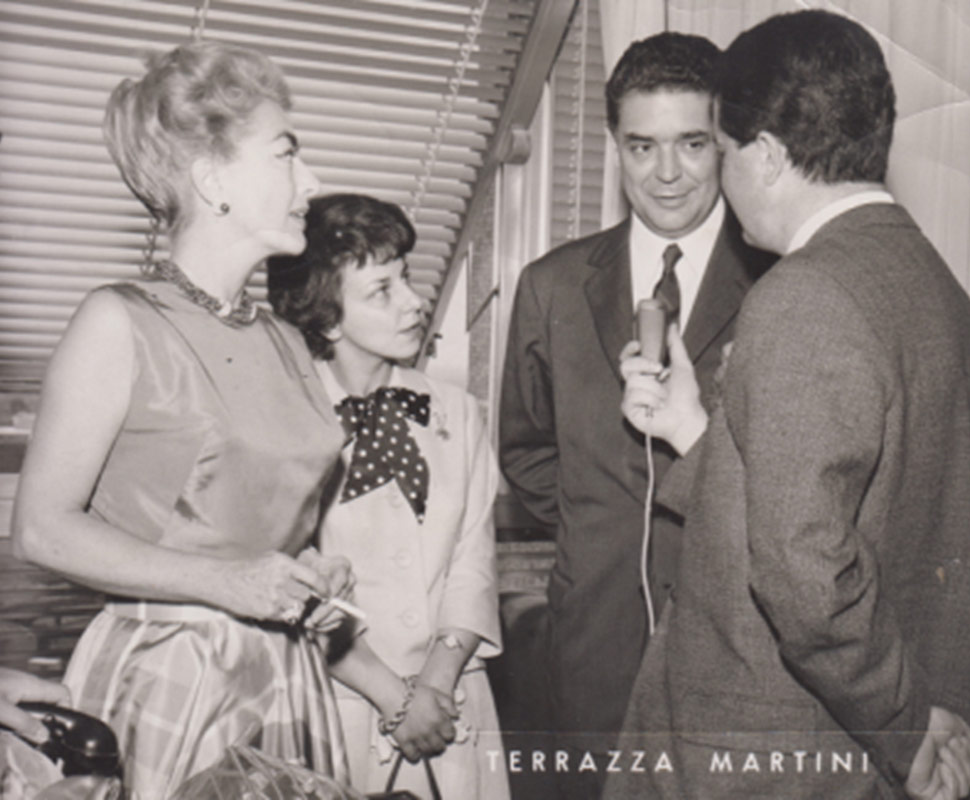
Joan Crawford
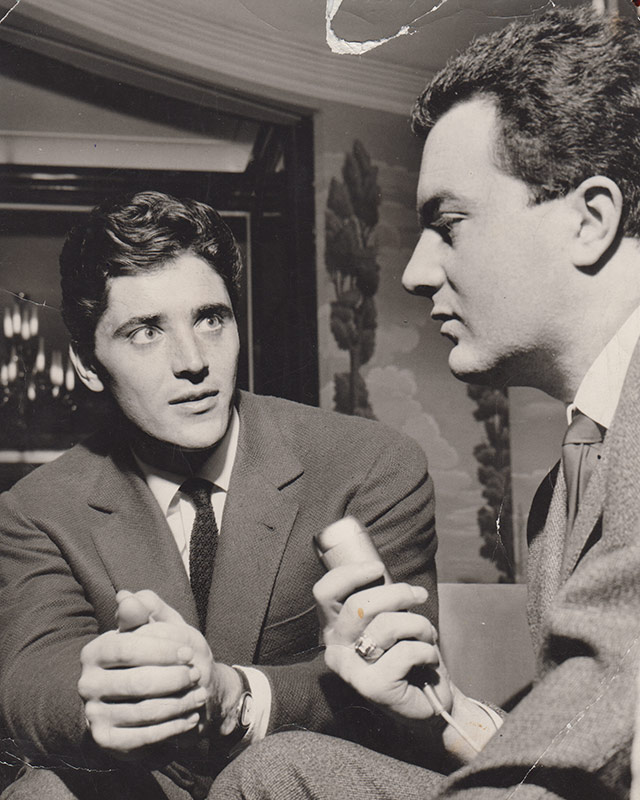
Sasha Distel
Victor J. Tognola spent a few years in Milan. From the Terrazza Martini, he sent RSI interviews with prominent figures from the worlds of culture and entertainment who were visiting Milan, including Vladimir Nabokov, Joan Crawford, Marina Vlady, Josephine Baker, Catherine Dunham, John Steinbeck, Benoit Mandelbrot, Sathya Sai Baba, Simon Wiesenthal, Wilhelm Backhaus, Albert Hofmann, Narayana Kasturi, Wilhelm von Sternburg, Alexander Shulgin, Ralph Metzner, Sergio Leone, Dino Risi, Derrick de Kerckhove, Paolo Grassi, Wolf Dieter Storl, Elémire Zolla, Eduardo De Filippo, Pier Paolo Pasolini, Roland Petit, Yves Montand, Hannes Schmidhauser, Sacha Distel, Donald Sutherland, Lale Andersen, Vittorio Gassmann, Anna Proclemer, Max Frisch, Martin Sheen, Imee Marcos, Tahnee Welch, Pierre Lévy, Marcel Marceau, Edgar Morin and Mario Tobino.
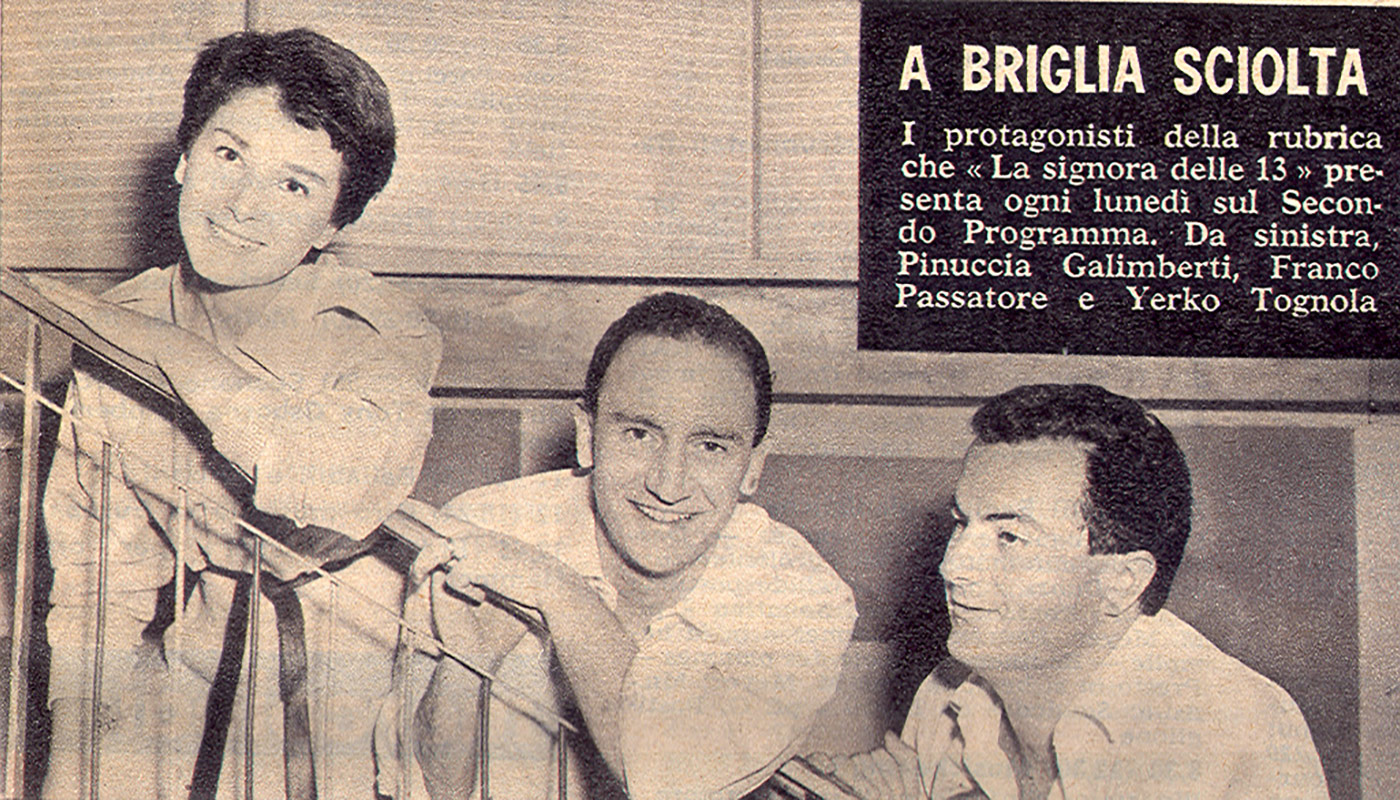
He wrote for the daily newspaper Il Giorno and collaborated with Rai Turin, where they asked him for the evolution of La luna si è rotta (The moon has broken): A briglia sciolta (Running wild).
Hired by the American communication agency McCann Erickson, he joined the team handling Barilla, Fanta, Palmolive. He made his first television documentaries, founded Frama Film International, and began an intense production of national and international commercials. To establish himself among the giants — who had immense budgets at their disposal — he proposed simple creative ideas, always executed with a high level of technical and production quality, whose strength required no elaborate staging. The "Cannes Lions" arrived, along with the Grand Prix for the Novartis Araldit commercial in 1990.
Victor J. Tognola produced two animated series: The Most Beautiful Fairy Tales in the World, loosely based on Aesop, and Clorofilla dal cielo blu, from the novel by Bianca Pitzorno (Mondadori), both featuring the drawings of Adelchi Galloni. In the 1980s, the feature film Illusione (Illusion) was written and directed by him, and presented at the Venice International Film Festival, the Karlovy Vary International Film Festival, and the FIADE European Audiovisual Festival, where it won the Best Actress award for Adelheid Koch. The Cannes International Advertising Festival commissioned him, along with five other directors, to make the film for the festival's 20th anniversary. He is a member of the Swiss Art Directors Club and the Art Directors Club Europe.
He was part of the Heptagon working group with Justus Dahinden, Albert Ernst, and Ernst Hiestand on the Kultur-Arena project for the Armenian city of Spitak, which was razed to the ground by the 1988 earthquake. He served on the Swiss Committee of the Association of Commercial Film Producers, for which he organized three editions of the "I Cristalli di Locarno" festival.
He was a consultant for the Federal Commission for Vocational Education and Technology and the Swiss member of the jury at the Golden Drum Advertising Festival and Media Meeting in Portorož in 2008.
From 2010, he left advertising to focus on fiction and documentaries of memory and reference.
His filmography coincided with that of Frama Film International, his creation to which he dedicated his energy and countless ideas.
Among his recent works are the documentaries La macchina venuta dal futuro (winner of the Alejandro Jodorowsky Award at the Hermetic International Film Festival of Venice) and Samadhi: We Are One, which wins the "Best People and Nature Award" at the Japan International Wildlife Film Festival.
Frama Film International
Frama Film - Victor J. Tognola
Big Sur · 6936 Cademario · Switzerland
Tel: +41 91 6053116 ·
Mobile: +41 76 3473116 ·
Fax: +41 91 6053351
Big Sur · 6936 Cademario · Switzerland
Tel: +41 91 6053116 · Mobile: +41 76 3473116 · Fax: +41 91 6053351